

 We respect your privacy. Your information is safe.
What Must Happen Before This Practitioner Blog Can Be Drafted
This piece cannot be written yet because the practitioner interview evidence gate has not been cleared. The dossier is explicit: "Practitioner voice: NOT YET AVAILABLE." Section 9 states: "Do not assign to writer until practitioner interviews are complete and reviewed." The E.3 form is equally clear: "If no first-person material exists, the story routes back for an SME interview before drafting. Do not reconstruct voice."
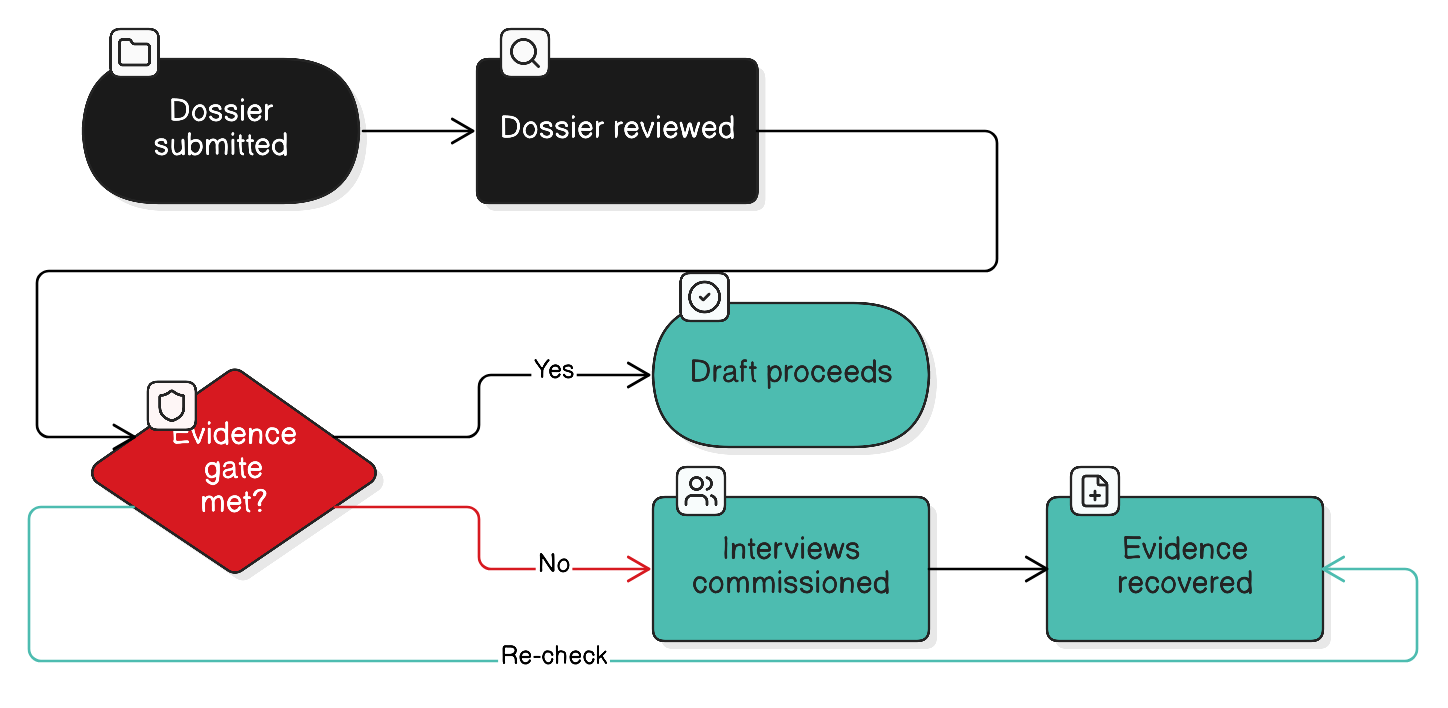
Every execution detail in this story — the component tradeoffs, the testing cadence changes, the guild embedding mechanics — is graded as an unrecovered critical gap. There are no verbatim quotes. There is no opening scene to reconstruct. There is no practitioner voice to write in or around.
An E.3 blog without practitioner evidence is not an E.3 blog. Writing one means inventing the voice the type exists to protect. The evidence gate is blocking, and it is not met.
Commission the practitioner interviews specified in the dossier (Section 9). This is the same standard applied to every engagement story in this content programme — a discipline described further in our earlier note on what makes a practitioner blog unpublishable.
- Delivery lead or tech lead on the engagement: to recover client context (anonymized industry, platform type, why WCAG was structural), the decision moment, and at least one qualitative outcome.
- Front-end lead on the engagement: to recover specific component design tradeoffs (what was built, what was rejected, why), how testing cadence changed at the sprint level, and the hardest accessibility-driven architecture decision.
- Accessibility guild lead: to recover how guild practitioners were embedded (daily workflow, authority, escalation path), what the guild model enabled that advisory roles would not, and whether this engagement is representative or an outlier.
Format: 45-minute panel if possible, or two 30-minute sessions (delivery plus front-end together, guild lead separately).
Decision Gate After Practitioner Interviews Are Completed
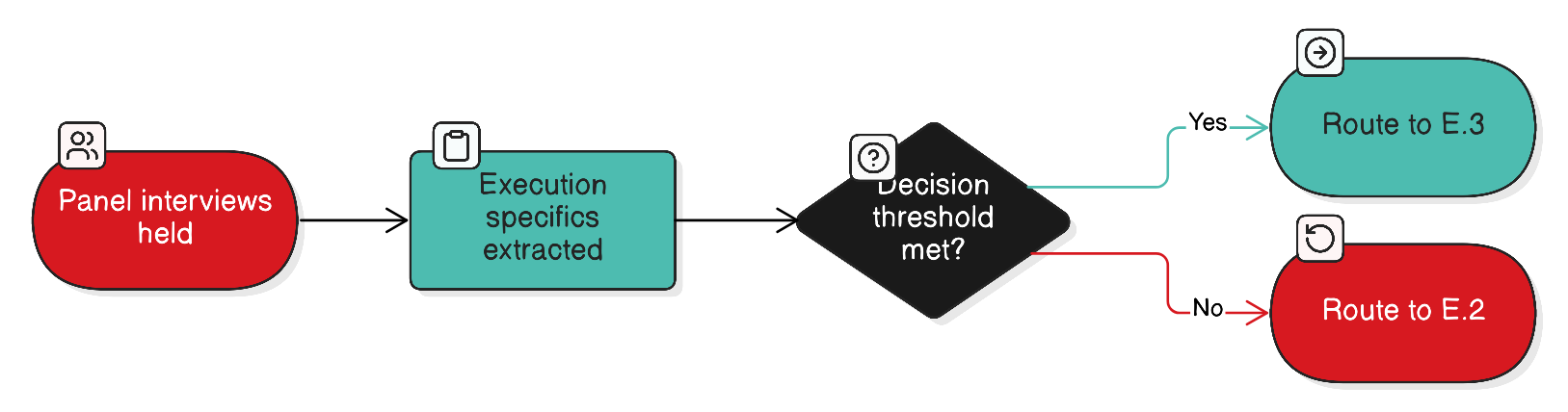
If interviews yield three or more specific component or process decisions with rejection rationale and at least one outcome signal (even qualitative), the piece proceeds as E.3. If not, reclassify as E.2 (problem-first) with the engagement as anonymous supporting evidence, not the protagonist.
This reclassification logic matters. The same principle applies to any practitioner-led content: the engagement's own voice is either present or it is not. There is no middle path that preserves the format's integrity. It is a standard we hold across delivery stories — including technical case work like our AI-assisted test restoration case and the caching crisis retrospective, both of which only went to draft after practitioner sign-off was confirmed.
Additionally, before drafting:
- Confirm client naming and clearance status with the account lead
- Confirm whether the engagement is complete or active (affects framing of outcomes)
- Retrieve the nine evidence chunks referenced in the story card
What the Draft Will Need from Those Interviews
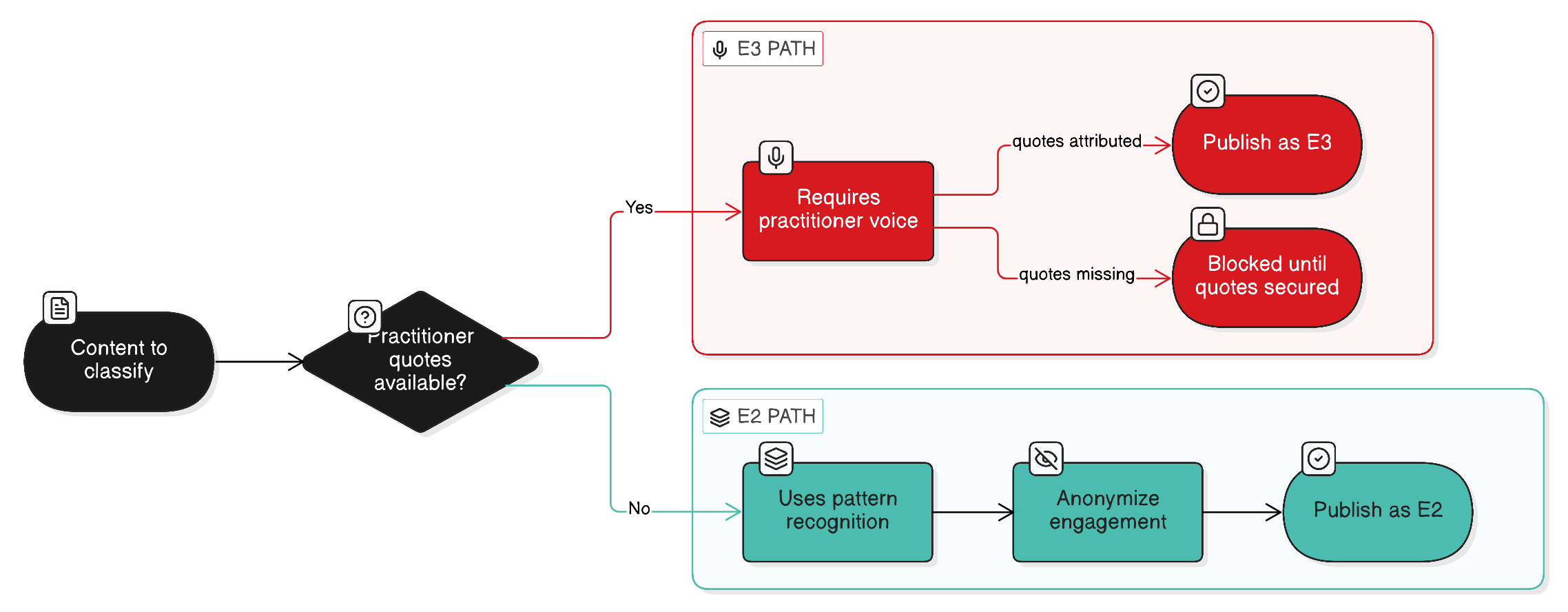
The five categories of evidence that must be recovered before this E.3 blog can be drafted are:
- A real opening moment: a specific scene the practitioner remembers, not one constructed by a writer
- Verbatim quotes (recorded or written) that carry "What we actually did," attributed to named practitioners who sign off on the final text
- At least three specific decisions: what was considered, what was rejected, and why
- The honest constraints: what was harder than expected, what the team would do differently, what remains unsolved
- One outcome signal, quantified if available, qualitative if not
The bar for outcome signal is deliberately low. A qualitative signal — "the accessibility guild model meant we caught issues in sprint rather than in UAT" — is sufficient if it is attributed and specific. What is not sufficient is a writer's inference that something probably went well.
For reference on what a fully-evidenced practitioner draft looks like at the execution layer, see Engineering Without the Theater, which was built from four practitioner sessions before a single sentence was drafted.
Output Metadata: Current Blocking Status
- Blog type: E.3 (Engagement / story-first, practitioner blog)
- Status: BLOCKED at evidence gate. Routed for interview commissioning.
- Reason: Zero practitioner voice material exists. Execution details are entirely unrecovered. The dossier's own gate ("do not assign to writer until practitioner interviews are complete and reviewed") has not been cleared.
- Recommended next action: Commission interviews per dossier Section 9, then return the piece for drafting with recovered evidence.
- Reclassification note: If interviews do not yield execution specifics, reclassify as E.2 (problem-first, accessibility as architectural constraint) with the engagement anonymized as one supporting beat, not the story's spine. An E.2 can argue the principle from cross-engagement pattern recognition; an E.3 cannot exist without the engagement's own voice.
Frequently Asked Questions
What is a practitioner interview evidence gate in content production?
A practitioner interview evidence gate is a workflow control point that blocks a blog or case study from entering the drafting stage until first-person source material — verbatim quotes, specific decisions, and outcome signals from the practitioners involved — has been collected and reviewed. The gate exists to prevent writers from reconstructing or inventing practitioner voice, which would undermine the credibility and specificity that make practitioner-led content valuable.
What is the difference between an E.3 and an E.2 blog format?
An E.3 blog is an engagement story told in the practitioner's own voice, with a specific project as the narrative protagonist. An E.2 blog is a problem-first piece that argues a principle from cross-engagement pattern recognition, using one or more engagements as anonymous supporting evidence rather than the story's spine. An E.3 requires practitioner interviews to exist; an E.2 can be drafted from synthesized expertise when practitioner voice is unavailable.
Why can't a writer reconstruct practitioner voice from available project documentation?
Reconstructed voice introduces inaccuracy at the decision level — the specific tradeoffs, rejection rationale, and honest constraints that distinguish a practitioner account from a polished case study. SME-attributed content that is later found to misrepresent what practitioners actually decided creates reputational and client-relationship risk that outweighs any production speed benefit. The evidence gate exists precisely to prevent this class of error.
What happens if the practitioner interviews don't yield enough specifics to proceed as E.3?
If interviews do not recover at least three specific component or process decisions with rejection rationale, plus at least one outcome signal, the piece is reclassified as E.2. The engagement becomes one anonymous supporting beat in a broader argument rather than the story's protagonist. The reclassification preserves the editorial integrity of the E.3 format while still making the engagement evidence useful.
How long should practitioner interviews be for an E.3 blog?
The recommended format is a 45-minute panel interview covering delivery lead, front-end lead, and accessibility guild lead together. If a panel is not possible, two 30-minute sessions — delivery and front-end lead together, guild lead separately — will recover sufficient material. Sessions shorter than 30 minutes rarely yield the decision-level specificity an E.3 requires.

Axelerant Editorial Team
The Axelerant Editorial Team collaborates to uncover valuable insights from within (and outside) the organization and bring them to our readers.

Leave us a comment